
How to Avoid Money-Talk Scams in Online Chat
Learn to recognise urgent money requests, investment pitches, fake fees, account-mule offers, verification-code theft, and emotional financial pressure in online chat.
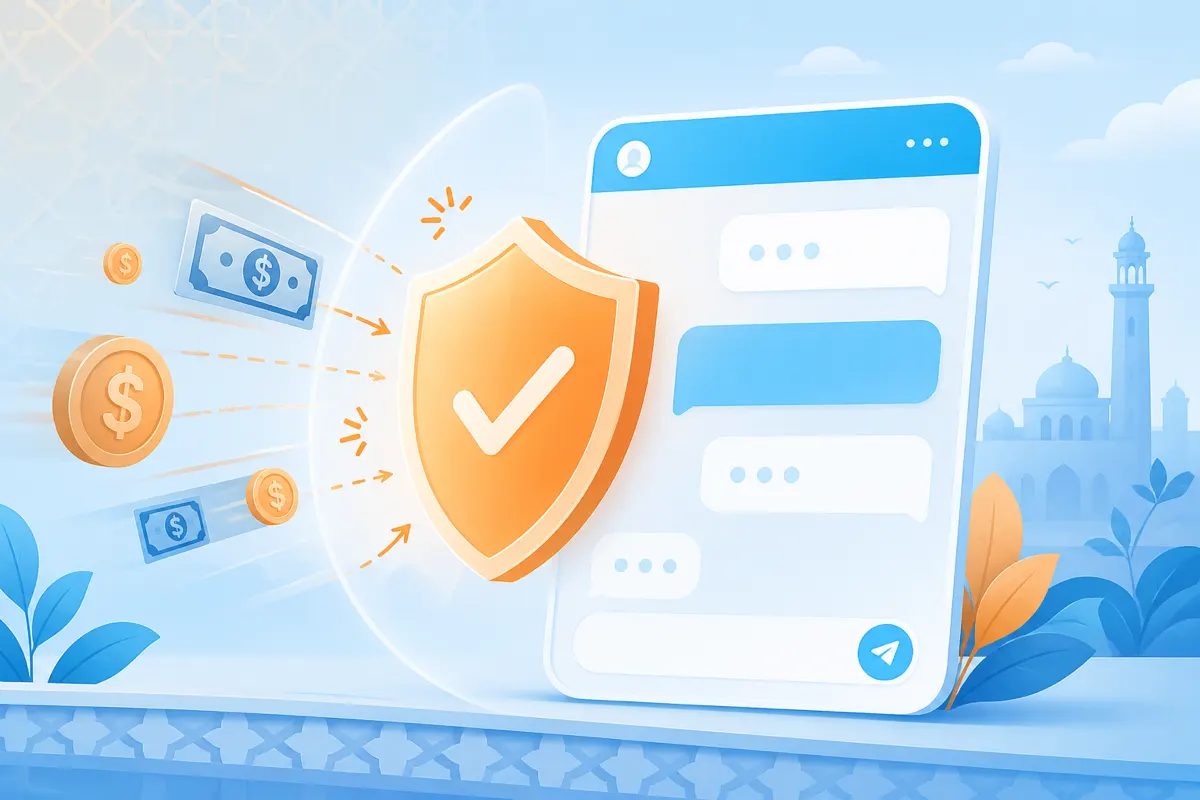
Money changes the tone of an online relationship. A friendly contact suddenly has an emergency. A stranger offers guaranteed profit. Someone claims a fee is needed to keep chatting. Urgency makes the request feel more important than verification.
The safest first response is a pause. Do not transfer money, share account access, or let embarrassment rush you.
Know the common approaches
Money-talk scams often use one of these stories:
- A medical, travel, rent, or phone-credit emergency
- A job that requires an advance fee
- A prize that needs tax or processing payment
- A high-return crypto, forex, or business investment
- A parcel held by customs
- A romantic interest who cannot access their own funds
- A request to receive and forward money
- A fee to verify, activate, or protect a chat account
The details vary, but the pressure is similar: act quickly, keep it secret, and trust the relationship instead of checking the facts.
How to avoid scams in online chat covers broader scam patterns beyond money requests.
Separate emotion from verification
A story may be sad and still be false. It may also be partly true while the financial request remains unsafe.
Ask yourself:
- Can I verify this independently?
- Why must payment happen immediately?
- Why are ordinary family, employer, bank, or official routes unavailable?
- Is the person asking for secrecy?
- Did the request appear soon after intense friendship or flirting?
- Are they rejecting safer alternatives?
Do not use a phone number, website, or screenshot supplied by the requester as your only verification. Search for the organisation independently or contact a trusted person through a known route.
Never share the keys to an account
Passwords, PINs, card details, one-time codes, recovery links, and authentication prompts are not ordinary information. They can give someone control of your account.
No genuine chatter needs your verification code. Be suspicious when someone claims they accidentally sent a code to your number or needs you to confirm a transaction.
Do not screen-share banking or payment apps. A caller can guide you into approving a transfer while pretending to reverse one.
If you already shared credentials, stop contact, change the affected password from a trusted device, notify the relevant bank or service through official channels, and review active sessions.
Do not become a money mule
A person may offer you a commission for receiving money, converting funds, buying gift cards, or sending payment onward. They may say their own account is temporarily blocked.
Do not do it. The money may come from fraud, stolen cards, compromised accounts, or illegal activity. Your account and identity will appear in the transaction trail.
Similarly, do not open an account, SIM, wallet, or payment profile for someone else. Never lend identity documents for “verification.”
When to share personal information explains why identity documents require strict protection.
Treat investment certainty as a warning
All genuine investments involve risk. Claims of guaranteed daily profit, secret trading signals, fixed crypto returns, or a limited place in a private group deserve scrutiny.
Scammers may show early fake profits or allow one small withdrawal to build confidence. They then demand larger deposits, taxes, or release fees.
Do not install remote-access software, connect a wallet, or send funds based on chat screenshots. Verify whether the provider is authorised through the appropriate official regulator in your jurisdiction. Seek independent financial advice for significant decisions.
Friendship and romantic interest are not financial qualifications.
Understand what chat access actually costs
FreePakistaniChat is completely free for guests and registered users. Guest login is free, account registration is free, and no payment is required to join, talk, or continue chatting after registration.
There is no ordinary conversation fee that another user needs to collect. Someone asking for money to unlock guest messages, preserve a registered account, reveal who viewed a profile, or make private chat “official” is not describing the site's free access.
Use the free chat information and privacy policy as official references. Do not trust payment instructions posted by a random room member.
Respond without entering a debate
You do not need to prove that a request is a scam before refusing.
Try:
- “I do not send money to people I know only online.”
- “I never share verification codes.”
- “I cannot receive or forward funds.”
- “I will verify this through an official source.”
- “Do not contact me about money again.”
A genuine friend may feel disappointed, but they should respect the boundary. Anger, guilt, threats, or demands for secrecy increase concern.
For repeated pressure, stop replying, block the user, and report the account. The community guidelines and safety page provide the appropriate route.
If you already sent money
Act quickly, but ignore anyone promising guaranteed recovery for another upfront fee.
- Contact your bank, wallet, or payment provider through its official channel.
- Ask whether the transaction can be stopped or flagged.
- Change compromised passwords and secure linked accounts.
- Save messages, usernames, transaction references, and receipts.
- Report the account and make any appropriate local fraud report.
- Tell a trusted person who can help you think clearly.
Do not threaten the scammer or send more money to recover the first payment. Shame causes delay, and delay can reduce available options.
Protect the wider room
If you see a suspicious pitch in public live chat, report it rather than organising a public attack. Warn others in general terms without publishing private documents or unverified accusations.
Moderators should remove fraudulent links and repeated solicitations promptly. Regulars should not endorse investments or fundraisers they have not verified.
Money requests deserve slower thinking than ordinary conversation. Pause, verify independently, keep account keys private, and remember that affection or urgency never turns an unsafe transfer into an obligation.