
Creating a Positive First Impression in Online Chat
Make a friendly first impression online with a clear nickname, useful greeting, thoughtful questions, respectful pacing, privacy awareness, and good group manners.
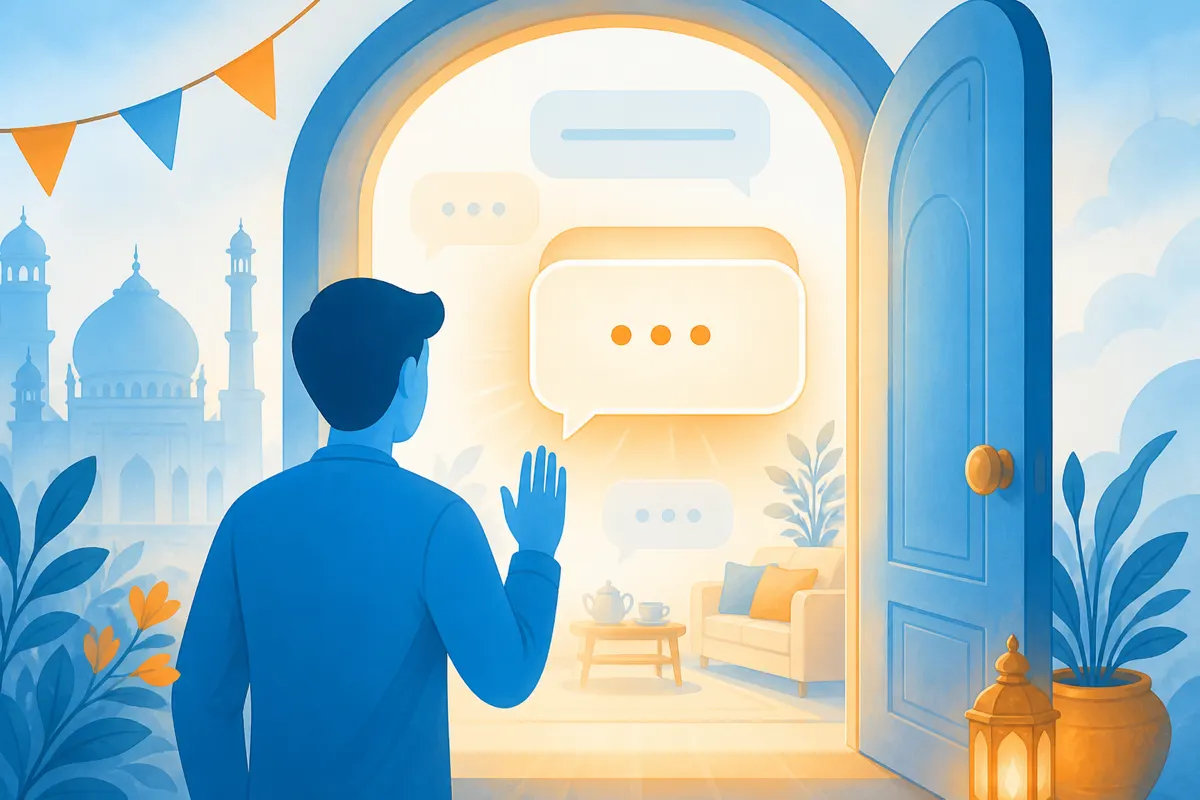
An online first impression forms from very little: a nickname, a greeting, the timing of a reply, and how you respond when the room does not immediately notice you.
You do not need to be the funniest or loudest person. A positive first impression usually comes from being clear, interested, and easy to talk with.
Choose a nickname that fits a shared room
A nickname can show personality without revealing your full identity. Keep it readable and avoid names that impersonate staff, threaten others, or use slurs.
If your first choice is taken, add a harmless word or number rather than personal information such as a birth date, phone digits, employer, or exact neighbourhood.
Nicknames for Pakistani chat offers ideas, while why nicknames protect identity explains the privacy value.
Read for a moment before speaking
Observe the current topic, pace, and language. This prevents you from interrupting a serious conversation with an unrelated joke or asking a question that was just answered.
You do not need to stay silent for a long time. A minute may be enough to notice whether the room is discussing cricket, recipes, exams, or a community issue.
Review the community guidelines so you know the basic expectations before a problem occurs.
Write a greeting with somewhere to go
“Hi” is fine, but a small addition makes replying easier:
- “Assalam-o-alaikum. How is everyone's evening?”
- “Hi, I am new here. What topic are you discussing?”
- “Salaam. Has anyone watched today's match?”
- “Good evening. I would love a drama recommendation.”
Do not flood the room if nobody answers immediately. Active conversations overlap, and members may be away from the screen. Wait, then contribute to the existing topic.
Conversation starters for Pakistani chat gives more safe openings.
Show interest without interviewing people
Ask about preferences, experiences, and ideas before private facts. “What do you like about your city?” is better than “Which street do you live on?”
Avoid opening questions about age, marriage, income, phone numbers, photos, or exact location. Even when such questions are common offline, they can feel intrusive from a stranger in anonymous chat.
Use the answer to ask a relevant follow-up. People notice when you listen rather than waiting to speak.
Match the room's pace
In a busy live chat, keep messages short enough to follow. In a slower room, a thoughtful paragraph may work.
Do not send the same line repeatedly, type in all capitals, or tag many people for attention. Avoid posting several memes before anyone understands your sense of humour.
People using phones or slower internet may reply late. Patience is part of the impression you create.
Be careful with humour
A joke can connect people quickly, but first-day teasing carries risk because trust does not exist yet. Use humour about shared situations or your own harmless experience.
Avoid jokes about province, ethnicity, religion, gender, disability, appearance, English, or economic background. Do not turn another user into the room's entertainment.
Group humour without hurting people explains how relationship and group pressure affect a joke.
Keep your first day private enough
Enthusiasm can lead to oversharing. You do not need to prove you are genuine by posting a photograph, document, phone number, or social profile.
Stay general:
- Share your province rather than your street.
- Mention your field rather than your employer.
- Discuss a hobby without revealing your daily route.
- Use a nickname instead of a legal name.
Read when to share personal information before moving a new connection elsewhere.
Respect boundaries immediately
The fastest way to damage an impression is to argue with a no. If someone declines a private message, photo request, flirtation, or personal question, accept it and continue normally.
Set your own limits just as clearly:
- “I prefer the public room.”
- “I do not share contact details.”
- “I am only online for a short session.”
Private chat boundaries explained offers more language for direct conversations.
Contribute instead of performing
You do not need to dominate the room to be remembered. Answer a new guest, clarify a topic, recommend something useful, or acknowledge a good point.
Avoid announcing expertise you cannot support. If you do not know an answer, say so. For health, legal, financial, and academic questions, encourage reliable sources rather than inventing certainty.
Do not join arguments merely to gain attention. Creating a friendly chat presence shows how consistency builds recognition more effectively than drama.
Recover normally from mistakes
Maybe you misunderstood a joke, used a phrase that sounded rude, or entered the wrong conversation. Correct it without a long performance:
“I misunderstood your message. Sorry about that.”
Then change the behaviour. Repeated apologies that demand reassurance can become another form of attention-seeking.
If another person makes a small mistake, give them the same room to recover.
Understand access clearly
FreePakistaniChat is completely free for guests and registered users. Guest login and accounts are both free. No payment is required to join, talk, or continue after registration.
You can make a first visit through guest chat without pressure to buy access. Registration may help you use a consistent identity, but it is not a paid conversation level and does not make one user more important than another.
Focus on the next impression too
A strong first message cannot compensate for repeated pressure or disrespect. Likewise, an awkward opening does not define you forever.
Return with the same nickname if continuity helps. Greet people, remember a shared topic, welcome someone newer than you, and leave politely when it is time.
The impression worth building is not “most impressive person in the room.” It is “someone whose presence makes conversation easier.” That reputation grows one considerate message at a time.